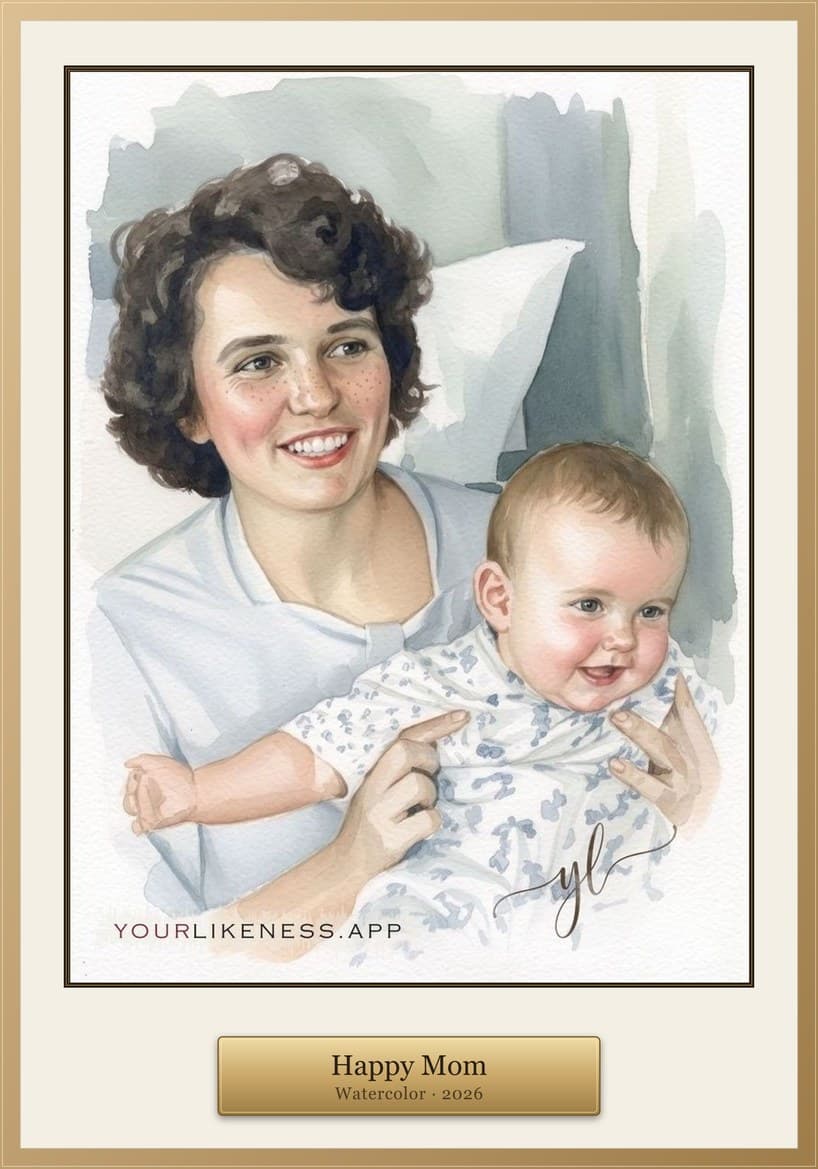
What's a giclée?
And why it matters when you're holding one.
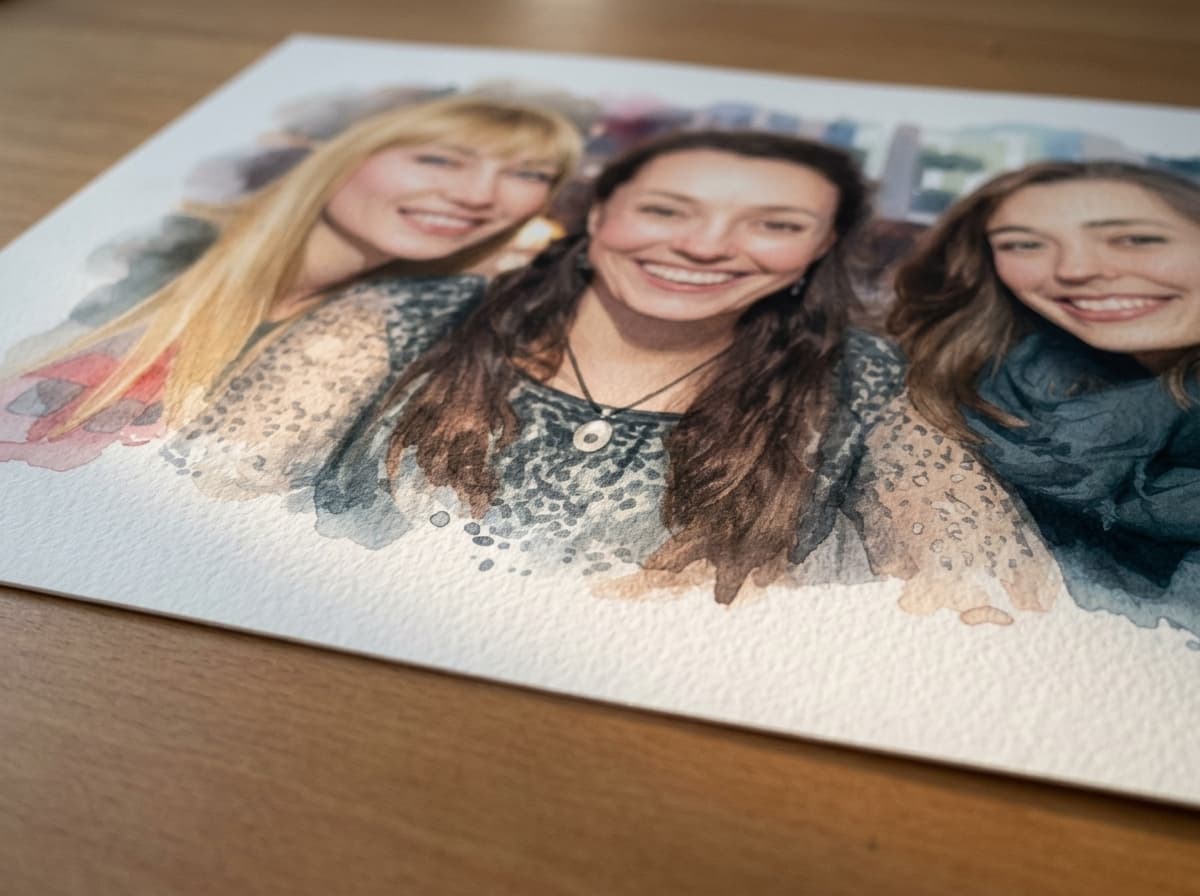
You've probably seen it on the site.
Giclée print.
308gsm cotton rag.
Words that sound like they belong in an art gallery.
Not in your hands.
Maybe you wondered what they meant.
Maybe you didn't.
Either way, I wanted to tell you.
Because this isn't just fancy language.
It's the reason your portrait feels the way it does when it arrives.
A word someone made up
In 1991, a printmaker named Jack Duganne had a problem.
He was using high-end inkjet printers to reproduce artwork.
Museum-quality stuff.
But he couldn't call them inkjet prints.
Because that sounded cheap.
Like something you'd run off at Kinkos for a school project.
So he made up a word.
Giclée.
French for “spray.”
It sounded elegant.
And more importantly, it separated the prints artists were selling in galleries…
From the ones people were making at home.
The name stuck.
And now, thirty years later, giclée means:
Museum-quality pigment ink.
Archival cotton paper.
Something made to be handed down, not thrown away.
Why it matters for your portrait
Most photo prints are thin.
Dye-based inks that fade in sunlight.
The kind of thing that looks fine in a frame…
But feels flimsy when you pick it up.
A giclée is different.
Heavy cotton paper with real texture.
Pigment-based inks that last lifetimes.
The kind that makes people ask which artist you commissioned.
It's the difference between I printed this and I had this made.
Better than what most artists used
Here's what surprised me when I started learning about this.
The giclée prints we make today?
They're better than what most working artists could get twenty years ago.
Back then, if you wanted archival reproductions of your work, you went to a specialized print shop.
Paid fifty, a hundred dollars per print.
And hoped they got the colors right.
(They usually didn't.)
Now we're printing on the same museum-grade paper galleries use.
With pigment inks that hold their color far longer than the dyes of that era.
At a price that would've seemed impossible back then.
The technology got better.
The materials got cheaper.
The quality stayed museum-grade.
What 308gsm cotton rag actually means
One more translation.
Because I throw this around too.
308gsm is grams per square meter.
It's a way of saying: this paper is thick.
For context:
Regular printer paper is about 80gsm.
Cardstock is around 200gsm.
This is 308gsm.
You feel the weight when you hold it.
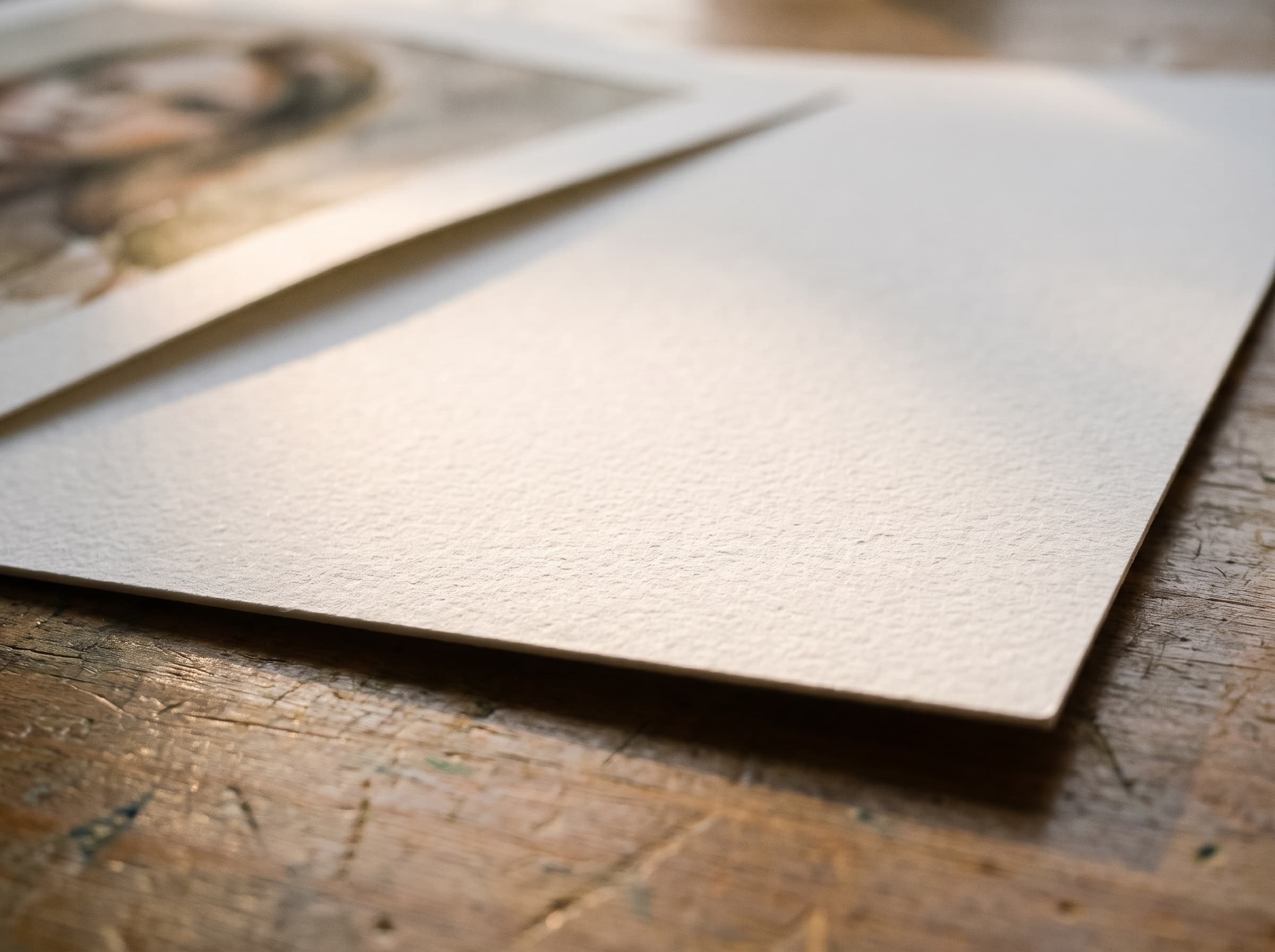
Cotton rag means the paper is made from cotton fibers, not wood pulp.
Which means it doesn't yellow.
Doesn't break down like regular paper.
Has a natural texture, like watercolor paper.
In other words, it's the kind of paper that makes a portrait look and feel like something an artist painted by hand.
The part that matters
You don't need to know any of this.
You don't need to be able to pronounce giclée.
(It's zhee-CLAY, by the way.)
What you do need to know is this:
When your portrait arrives, it doesn't look like something you printed at Staples.
It shows up on heavy, textured paper.
The kind galleries use.
The kind that makes people stop and ask where you got it.
And when you hand it to someone as a gift, they don't just see it.
They feel it.
The weight.
The texture.
The care.
That's what a giclée is.
That's why it matters.
Now you know.