The Paper
And why it matters when you're holding one.
Free shipping on all products. US orders, now through October 31st.
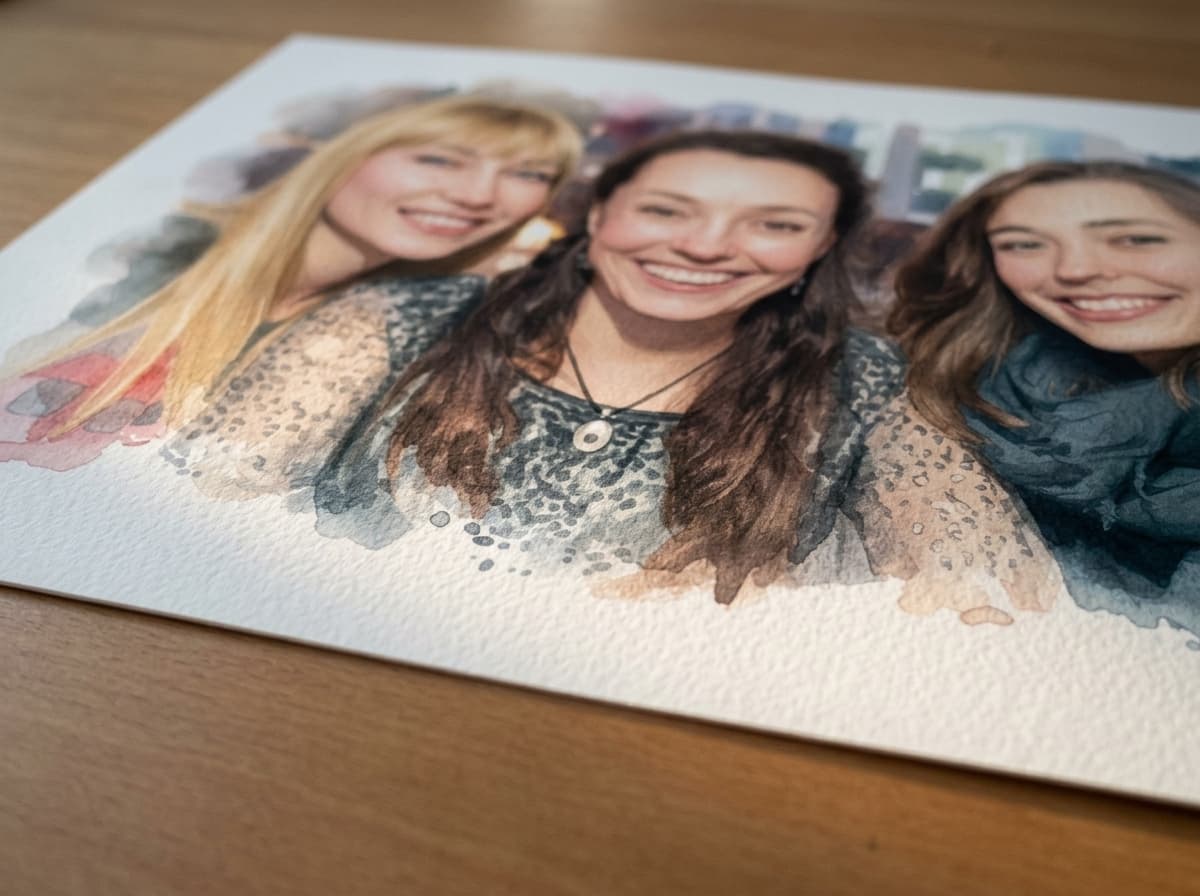
You've probably never thought about what your portrait arrives on.
Most people don't.
Until they hold it.
A word about paper
Most prints you've held in your life were thin.
The kind of paper that bends when you pick it up.
Inks that fade in a few years.
Fine for a photo from the drugstore.
Not fine for a face you're putting on a wall.
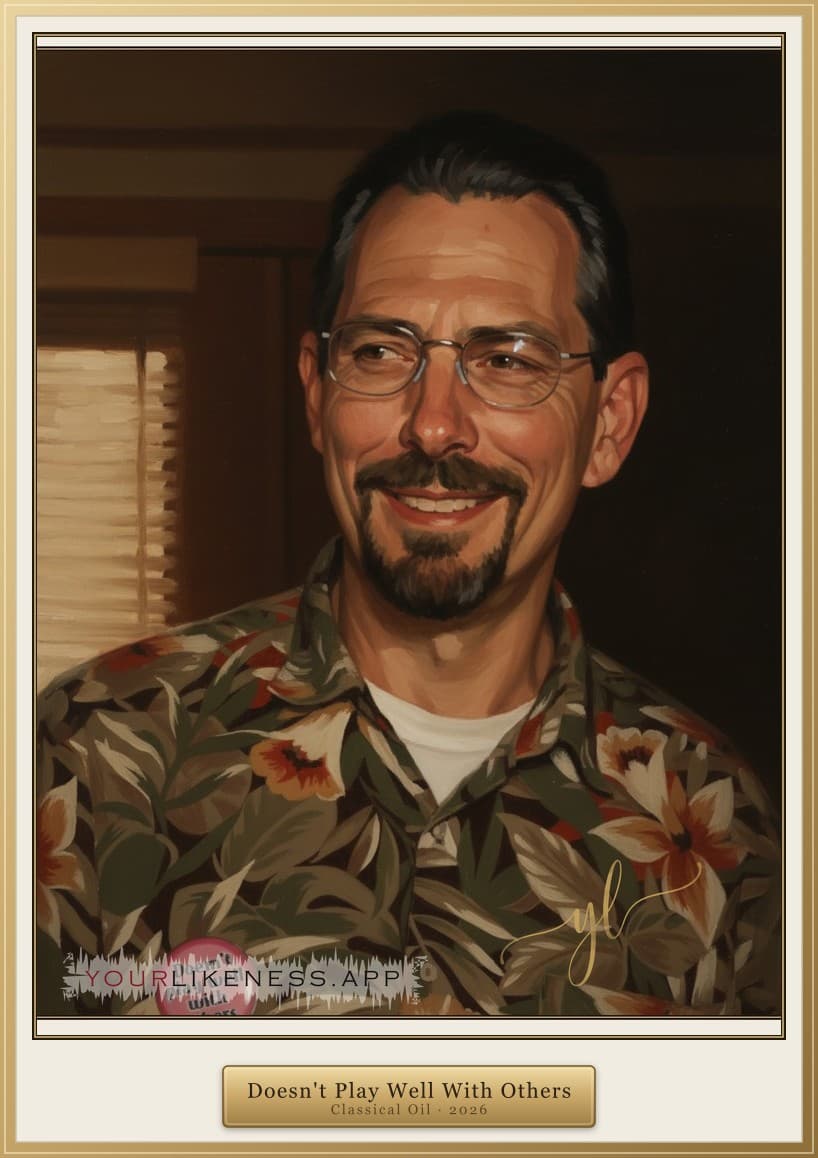
The paper your YourLikeness portrait arrives on is different.
It's heavy.
Cotton, not wood pulp.
The kind of paper that doesn't feel like something you ran off on a home printer.
When you pick it up, you feel the weight before you see the portrait.
That weight is the point.
Two papers, one standard
Not every portrait belongs on the same surface.
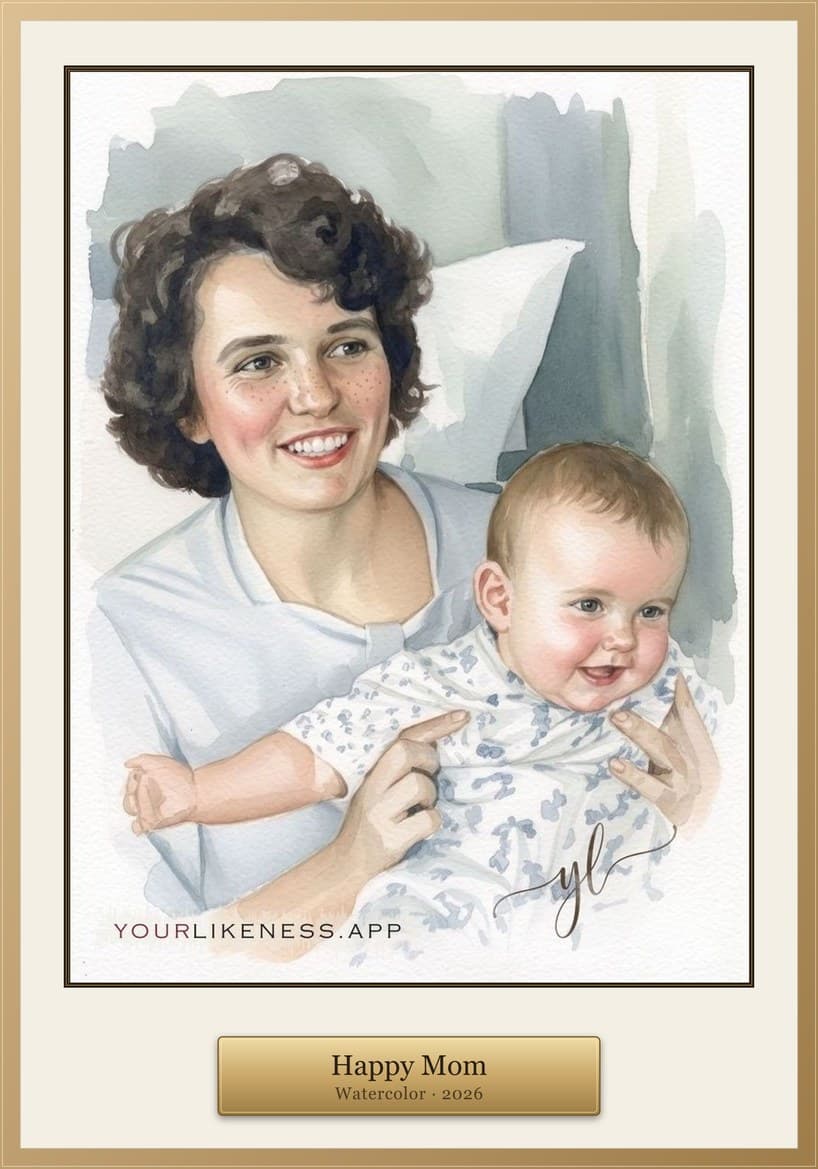
A watercolor wants texture.
The kind you can feel with your fingertips — a tooth that catches light the way real watercolor paper does.
So watercolor portraits arrive on cold press watercolor paper.
Heavy. Textured. The surface is part of the art.
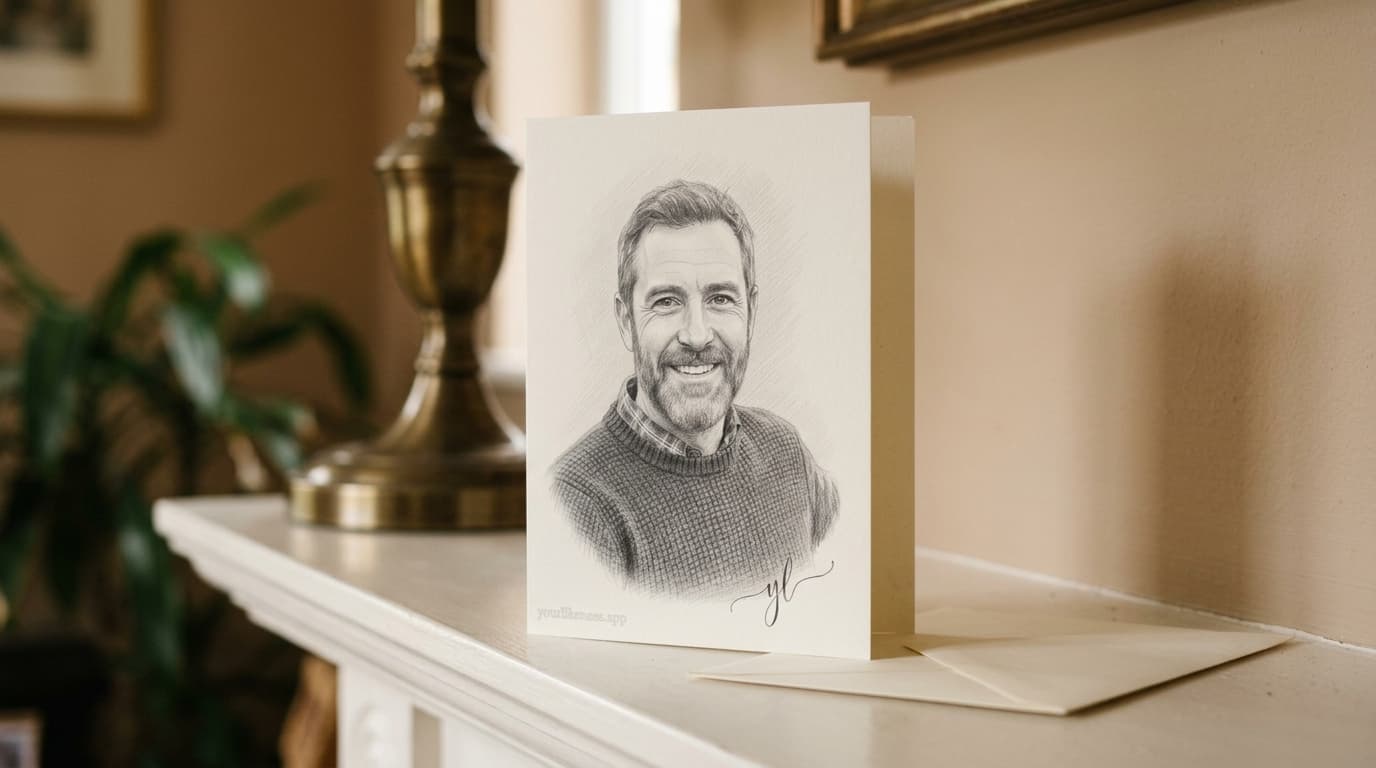
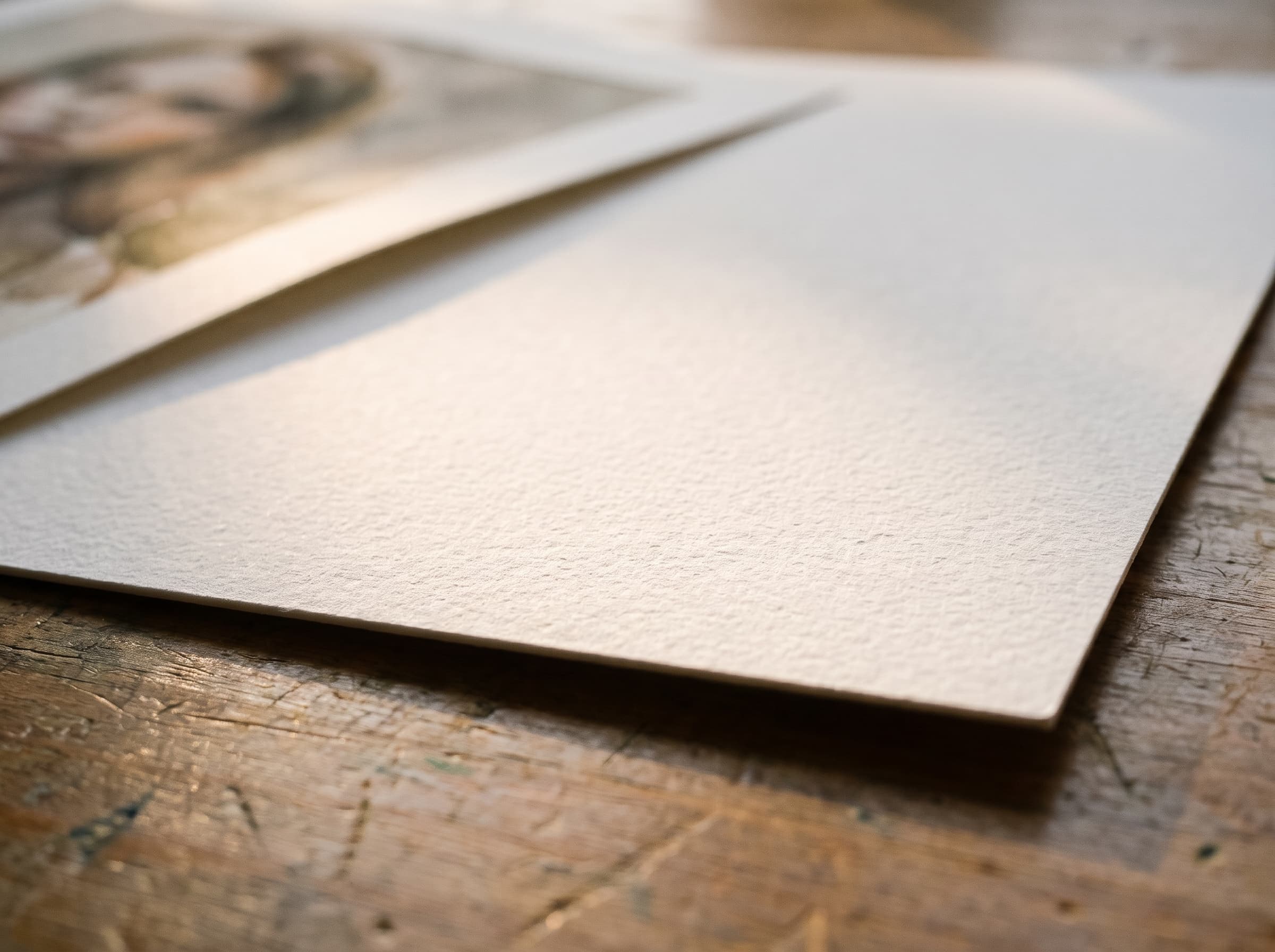
Pencil portraits arrive on a smooth matte paper from Hahnemühle — a German paper mill that's been at it since 1584.
Still heavy cotton. Still museum-quality.
But the surface is clean and even, so the detail stays sharp and the lines stay precise.
Both papers are made from cotton.
Both are thick enough to feel serious in your hands.
Both are created to last.
The difference is the surface — and we matched each one to the style that needs it.
How long it lasts
The paper and pigment inks used for your portrait are expected to last 100 years or more indoors, out of direct sun.
Framed behind glass is even better.
This isn't a guess. It comes from lab testing by the printer and the paper mill.
Pigment inks hold their color far longer than the dye-based inks used in most everyday printing.
That's why museums and galleries use this method.
And it's why we do, too.
Why it matters for your portrait
Here's the honest version.
You could create a beautiful portrait on this site and never order a print.
Save it to your phone. Share it. Keep it in your collection.
But if you do decide to put it on a wall…
What it arrives on is the difference between I printed this and I had this made.
Museum-quality paper.
Pigment inks that hold their color.
The kind that makes people stop and ask who the artist is.
The part that actually matters
You don't need to know any of this.
You don't need to know what kind of cotton or which factory or how heavy.
What you need to know is this:
When your portrait arrives, it doesn't feel like a photo.
It feels like something that was created for someone who matters.
Because it was.
The weight.
The surface.
The care.
That's what you're holding.
That's why it matters.
Now you know.